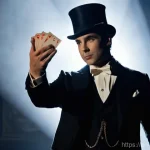
Have you ever watched a magician perform and felt that immediate rush of childlike wonder mixed with an insatiable need to know “how did they *do* that?” I know I have!

There’s something truly captivating about illusions that defy our understanding, whether it’s a classic card trick or a mind-bending grand spectacle. It’s that timeless spark of mystery, that thrilling moment where reality seems to bend just for us, that keeps us coming back for more.
In our fast-paced world, where even technology seems like magic, the art of illusion continues to evolve, pushing boundaries and blurring the lines between what’s real and what’s merely perceived, making our curiosity about its secrets stronger than ever.
Let’s uncover the fascinating world of magic and exactly how these incredible feats are pulled off, shall we? You’re going to love what we explore together.
Unmasking the Mind Games: The Psychology Behind the Spectacle
You know that feeling, right? When a magician pulls off something truly impossible and for a split second, your brain just short-circuits. You’re left wondering if you actually saw what you thought you saw, or if reality just took a little holiday. It’s not just about the trick itself; it’s a masterclass in human psychology. Magicians, the good ones anyway, are incredible amateur psychologists. They understand how our brains process information, how our attention works (or rather, doesn’t work, when they want it not to), and what our inherent biases are. They play on our expectations, our assumptions, and even our desire to believe in something extraordinary. I’ve personally found that the most baffling illusions aren’t necessarily the most complex technically, but the ones that manipulate my perception so subtly that I don’t even realize it’s happening. They’re constantly engineering a disconnect between what we *think* should happen and what *actually* happens, leaving us scrambling to fill in the gaps with fantastical explanations. It’s like they’re writing a script in our minds, and we’re just playing along, blissfully unaware of the director behind the scenes.
The Power of Suggestion and Expectation
Ever noticed how a magician might say, “Watch my left hand closely,” only for something incredible to happen with their right? That’s classic suggestion at play! Our minds are surprisingly suggestible, and a skilled illusionist uses this to their advantage. They prime us, setting up an expectation that steers our focus in one direction, while the real action unfolds elsewhere. Think about card tricks. When someone is asked to pick a card, they feel like they have total freedom, right? But often, the magician has already subtly influenced that choice, or prepared the deck in a way that makes the “free choice” an illusion in itself. I remember one time, I was so convinced I had freely chosen a card, only for the magician to reveal it was the *only* card reversed in the entire deck. My mind was blown! It wasn’t about quick hands; it was about the setup, the narrative, and my own expectation of a random outcome.
Controlling the Narrative: Why Stories Matter
Beyond just the mechanics, a truly great magic trick is a story. It has a beginning, a middle, and an unbelievable climax. Magicians don’t just *do* tricks; they *perform* them, crafting narratives that captivate and misdirect. When a magician tells a compelling story, whether it’s about a magical journey or a historical artifact, they’re not just entertaining us; they’re building a world where the impossible can exist. This narrative framework keeps our minds busy, engaging our imagination and emotional responses, making us less likely to scrutinize the technical details. It’s like reading a gripping novel where you’re so invested in the characters and plot that you overlook a minor inconsistency. The story becomes the vehicle for the illusion, carrying our disbelief along for the ride. I’ve often left a magic show not just impressed by the trick, but by the sheer theatricality and the emotional journey I was taken on.
Masters of Misdirection: The Art of Focus Control
Misdirection isn’t just about diverting your gaze; it’s about diverting your *attention*. It’s a subtle ballet between what the audience *should* be seeing and what the magician *wants* them to see. Think of it like a carefully choreographed dance. The magician is always a step ahead, guiding your eyes, your thoughts, and even your emotional responses. It’s not about making you look away completely, but rather making you *think* you’re looking at the right thing, while the secret work happens in your peripheral vision or during a moment of relaxed attention. My friend, who’s an amateur magician, once told me, “The best misdirection doesn’t feel like misdirection at all. It feels like you’re simply following the natural flow of the performance.” This is why a magician’s patter, their gestures, even their facial expressions are just as important as the physical dexterity involved. They’re all tools in the grand scheme of controlling your focus and making the impossible seem effortless. It’s truly an art form that takes years of practice to master.
Verbal Patter and Body Language as Distractions
Have you ever noticed how magicians often talk a lot during a trick? That’s not just to entertain! Their verbal patter is a powerful tool for misdirection. A well-timed joke, a rhetorical question, or a story can pull your attention away from their hands at a crucial moment. Similarly, their body language is meticulously crafted. A sudden turn, a pointed finger, or even a subtle shift in gaze can direct your eyes exactly where they want them to go, or more importantly, *away* from where the real secret is unfolding. I once saw a magician use a dramatic gesture with one hand, ostensibly to highlight something, while the other hand, almost imperceptibly, executed the core move of the trick. It was so smooth, so natural, that my brain simply didn’t register the covert action. It felt like my own eyes had betrayed me, not that I was cleverly manipulated.
Exploiting Natural Human Tendencies
Magicians are brilliant at exploiting our natural human tendencies. We tend to focus on movement, especially rapid movement, and we’re often drawn to faces and voices. They use these instincts against us. If a magician makes a sudden, theatrical move, our eyes are naturally drawn to it, allowing them a precious fraction of a second to perform a hidden action. We also have a limited capacity for attention, and magicians are experts at overloading it. They might present multiple stimuli at once – a bright flash, a loud noise, a captivating story – making it impossible for us to process everything, and thus, making it easier for them to hide their secrets in plain sight. It’s like trying to listen to three conversations at once; you’re bound to miss something important in at least two of them. It’s not about tricking dullards; it’s about cleverly outmaneuvering even the sharpest observers by understanding how our attention actually works.
Sleight of Hand: More Than Just Fast Fingers
When most people think of sleight of hand, they imagine lightning-fast fingers, a blur of motion too quick for the eye. While dexterity is absolutely crucial, it’s only one piece of the puzzle. True sleight of hand is an intricate dance of timing, choreography, psychology, and, yes, a healthy dose of practice. It’s about making a move so natural, so motivated by the apparent action, that your brain simply doesn’t flag it as suspicious. It’s not just about speed; it’s about economy of motion, making the secret move blend seamlessly into the larger, innocent action. I’ve spent countless hours trying to perfect even simple card shuffles, and I can tell you, the challenge isn’t just getting the card where it needs to go; it’s making it look like it *always* belonged there, without any awkward pauses or unnatural movements. That’s the real magic – making something incredibly difficult look utterly effortless.
The Importance of Timing and Economy of Motion
Timing is everything in sleight of hand. A fraction of a second too early or too late, and the illusion crumbles. Magicians meticulously time their secret moves to coincide with moments of natural distraction, audience blinks, or even the peak of their verbal patter. This precise timing ensures that the secret action is either missed entirely or perceived as part of an unrelated, innocent gesture. Coupled with this is the principle of economy of motion. Every movement a magician makes is purposeful. They strive to achieve the desired effect with the smallest, most direct, and most natural-looking movement possible. An unnecessary flourish might draw attention to the very thing they’re trying to hide. It’s about efficiency and grace, making the secret action feel like a natural extension of their presence, not a separate, deceptive act.
Practicing Until Perfection Becomes Invisible
This is where the real grit comes in. You can have all the clever theories and psychological insights in the world, but without countless hours of practice, sleight of hand remains a clumsy attempt. Magicians spend years, sometimes decades, perfecting their craft. They practice in front of mirrors, record themselves, and repeat movements thousands of times until they become second nature. The goal isn’t just to be able to *do* the move; it’s to be able to do it perfectly, every single time, under pressure, while simultaneously engaging with an audience, talking, and maintaining a captivating persona. My own attempts at learning a simple coin vanish taught me just how much dedication this requires. It’s frustrating, repetitive, and often disheartening, but when you finally nail that move and fool someone, even just a friend, the feeling of accomplishment is absolutely exhilarating. It’s about internalizing the mechanics so deeply that your hands seem to move on their own, guided by an unseen force.
Grand Illusions: Engineering the Impossible
When you witness a grand illusion – someone vanishing from a box, a car appearing out of thin air, or a person being sawn in half – it feels like a monumental, almost supernatural event. But behind every jaw-dropping spectacle is often a meticulously engineered piece of equipment and a profound understanding of physics, optics, and human perception. These aren’t just parlor tricks scaled up; they’re often complex mechanical marvels designed to create an impossible visual. The genius isn’t just in the idea, but in the execution: how to build something robust enough for a stage, yet delicate enough to disappear, or appear, seamlessly. I’ve always been fascinated by the sheer ingenuity involved. It’s like watching a master architect design a building that defies gravity, only here, the building isn’t real, but the illusion of its existence is incredibly potent. The scale changes everything; what works with a deck of cards needs a completely different approach when you’re making a tiger vanish.
Hidden Compartments and Clever Angles
Many grand illusions rely on what I like to call “architectural deception.” This often involves hidden compartments, trap doors, and clever angles that exploit the audience’s fixed perspective. For instance, the classic “person in a box” illusion often uses mirrors or strategically placed panels that create the *appearance* of an empty space, while a person is actually folded up or hidden in a narrow, unseen area. The audience’s viewpoint is absolutely critical here. If you could see the illusion from every angle simultaneously, the secret would be immediately revealed. This is why stage design, lighting, and the precise placement of the audience are all crucial components. I remember seeing a “levitation” illusion where the performer was seemingly floating in the middle of the stage. My initial thought was magnets! But later, I learned it was a clever system of wires and supports, expertly hidden by lighting and the sheer scale of the stage, making them virtually invisible from my seat.
Optical Illusions and Reflective Surfaces
Another powerful tool in the arsenal of grand illusionists is the use of optical illusions, often involving mirrors and other reflective surfaces. The “Pepper’s Ghost” effect, a classic from the 19th century that’s still used today, creates the illusion of a transparent ghost-like figure appearing or disappearing by reflecting an off-stage actor onto a large sheet of glass. Modern illusions utilize advanced materials and lighting techniques to create similar, yet far more sophisticated, visual deceptions. These techniques play directly on how our eyes and brains interpret light and space. They can make objects appear where they aren’t, or disappear from where they should be, all through the clever manipulation of reflections and refractions. It’s like turning a stage into a giant funhouse mirror, but with such precision that you can’t tell what’s real and what’s just a reflection.
The Unseen Helpers: Gimmicks and Gadgets
While we often attribute magic to supernatural powers or incredible dexterity, the truth is, a lot of it comes down to ingenious engineering and clever hidden mechanisms. These “gimmicks and gadgets” are the unsung heroes of many magic tricks, doing the heavy lifting behind the scenes. From specially prepared cards and coins to elaborate remote-controlled devices, these tools allow magicians to achieve effects that would be impossible with bare hands. It’s not about cheating; it’s about utilizing technology and clever design to enhance the illusion and make it even more baffling. I’ve always had a soft spot for these hidden devices, because they represent another layer of human ingenuity. It’s not just about deceiving the eye; it’s about designing a world where the laws of physics can be temporarily bent, thanks to a well-placed magnet, a hidden thread, or a perfectly weighted prop.
Prepared Props and Secret Devices
Many everyday objects used in magic tricks are far from ordinary. A deck of cards might be “stacked” in a particular order, or have subtle markings. Coins might be secretly weighted or contain tiny magnets. These prepared props are essential for countless routines, allowing magicians to control outcomes or perform seemingly impossible feats with ease. Beyond simple props, there are complex secret devices. These could range from small, handheld mechanisms that help a coin vanish, to larger, motorized contraptions that assist in grand illusions. The key is that these devices are almost always invisible to the audience, or designed to look like a perfectly normal part of the performance. The real magic isn’t just in operating them, but in making their existence completely undetectable, allowing the audience to believe the magician’s inherent skill is the sole driver of the impossibility.
Leveraging Technology for Modern Magic
In our increasingly tech-driven world, it’s no surprise that magicians are also embracing modern technology. While the core principles of misdirection and psychology remain the same, new gadgets and electronic devices are opening up entirely new avenues for illusion. Imagine mind-reading tricks performed with hidden earpieces, or predictions sent wirelessly to a performer’s stage props. Augmented reality and projection mapping can create incredible visual effects that blur the line between physical and digital, making objects appear and disappear in ways that were once only possible in science fiction. I’ve seen performances where drones become part of the act, or where digital screens seem to magically interact with physical objects. It’s a thrilling evolution, proving that magic isn’t stuck in the past; it’s constantly innovating, finding new ways to baffle and delight audiences with the help of cutting-edge tech.
The Long Road to Mastery: Practice, Dedication, and Performance
Watching a master magician, it’s easy to assume they were born with some innate talent, a special touch that allows them to defy reality. But the truth, as with any art form, is a grueling journey of relentless practice, unwavering dedication, and countless failures. Becoming truly proficient in magic isn’t just about learning a few tricks; it’s about honing a vast array of skills, from physical dexterity and memorization to psychological manipulation and theatrical presence. It’s a lifestyle choice, an obsession for many, where every spare moment is spent perfecting a move, refining a line of patter, or brainstorming a new illusion. I’ve personally dabbled in a few card tricks, and the sheer amount of repetition required to make even a simple sleight look smooth is astounding. It’s a testament to human perseverance, showing that even the most ‘magical’ abilities are often just the result of extraordinary hard work and commitment.
The Repetitive Grind Behind Flawless Execution

Imagine doing the same small movement thousands, perhaps tens of thousands, of times. That’s the reality for a magician perfecting a sleight of hand. It’s a repetitive grind, often frustrating and monotonous, but absolutely essential for achieving flawless execution. Each finger movement, each wrist flick, each angle is practiced until it becomes muscle memory, so ingrained that it can be performed without conscious thought. This allows the magician to focus their mental energy on other aspects of the performance, like engaging with the audience or delivering their patter, rather than worrying about the mechanics of the trick. My friend once described it as “building a mental library of perfect movements.” It’s during this repetitive practice that the awkwardness is ironed out, the hesitations are eliminated, and the trick transforms from a clumsy sequence of actions into a seamless, magical moment. It’s the sweat and tears behind the smile.
Developing a Unique Persona and Stage Presence
Beyond the technical skills, a magician’s persona and stage presence are absolutely vital. Learning a trick is one thing; performing it with charisma, humor, and an air of mystery is another entirely. This involves developing a unique character, understanding how to command attention, connect with an audience, and manage the flow of a performance. A great magician isn’t just a technician; they’re a storyteller, an actor, and a showman. They understand how to build anticipation, deliver punchlines (both verbal and magical), and leave the audience with a lasting sense of wonder. I’ve seen magicians who were technically brilliant but lacked that spark, and their performances, while impressive, just didn’t quite land. Conversely, some magicians, with perhaps less complex tricks, absolutely captivated the room through their sheer personality and presence. It’s about bringing the magic to life, not just performing it.
Why We Love Being Fooled: The Enduring Joy of Wonder
So, we’ve peeked behind the curtain a little, explored some of the clever techniques and psychological ploys magicians use to create their illusions. And yet, knowing *how* some of it works doesn’t diminish the magic for me. In fact, it often enhances it, giving me an even deeper appreciation for the artistry and ingenuity involved. Why do we, as intelligent, rational beings, actively seek out experiences where we know we’re going to be deceived? I believe it boils down to a fundamental human desire for wonder, for a break from the mundane, for a fleeting moment where the impossible seems real. In a world saturated with information and scientific explanations, magic offers a beautiful counterpoint, a space where mystery still reigns supreme. It’s an escape, a playful challenge to our perceptions, and a reminder that there’s still so much to marvel at. This is why magic continues to thrive, even in our hyper-connected, skeptical age.
A Break from Reality: Escaping the Mundane
Life can be pretty predictable sometimes, can’t it? Bills, work, responsibilities – it’s easy to get caught in the grind. Magic offers a powerful, temporary escape from that reality. For a few minutes, or an hour, we get to suspend our disbelief and enter a world where anything is possible. It’s a moment of pure, unadulterated fantasy, a chance to feel that childlike awe again. This isn’t about being naive; it’s about consciously choosing to engage with an experience that bypasses our logical, analytical minds and speaks directly to our sense of wonder. I’ve always found that a good magic show is incredibly therapeutic – it forces me to stop overthinking and just *experience* something truly astonishing. It’s a welcome mental vacation, a moment to forget the rules and just enjoy the ride.
The Thrill of the Challenge: Our Brains Love a Puzzle
Even though we want to be fooled, there’s a part of our brain that absolutely loves a good puzzle. When a magician performs, our minds instantly spring into action, trying to figure out “how did they do that?” It’s a mental workout, a playful challenge to our observational and deductive skills. We’re actively engaged in trying to uncover the secret, even as we’re being delighted by the illusion. This intellectual sparring is a huge part of the appeal. When you *can’t* figure it out, the mystery deepens, and the magic feels even more potent. It taps into our innate curiosity, our drive to understand the world around us, even when that world is being cleverly manipulated. It’s a delightful paradox: we know we’re being deceived, we enjoy the deception, and we secretly hope we can solve the puzzle, all at the same time.
| Aspect of Magic | How It Enhances the Illusion | My Experience/Takeaway |
|---|---|---|
| Psychological Misdirection | Guides audience attention, exploits cognitive biases, and manages expectations to hide the secret. | Realized how much my own brain’s assumptions were being used against me; it’s less about fast hands, more about smart thinking. |
| Sleight of Hand | Relies on precise timing, economy of motion, and countless hours of practice to make secret moves invisible. | Learned that incredible dexterity isn’t just speed; it’s also about making unnatural movements appear perfectly natural and motivated. |
| Grand Illusions | Uses elaborate props, hidden compartments, mirrors, and engineered solutions to create large-scale impossible feats. | Witnessing the scale of these illusions made me appreciate the engineering and theatrical staging required to pull them off flawlessly. |
| Performance & Patter | Engages the audience with storytelling, humor, and charisma, diverting focus and building an emotional connection. | A great story or engaging persona can make even a simple trick feel extraordinary and truly memorable. |
The Evolution of Enchantment: Magic in the Modern Age
It’s easy to think of magic as a dusty old art form, something from a bygone era of top hats and stage curtains. But if you’ve been paying attention, you’ll know that magic is constantly evolving, adapting to new technologies and cultural landscapes. What captivated audiences a century ago might not hold the same power today, and magicians are always pushing boundaries, experimenting with new ways to baffle and delight. From street performers using everyday objects to grand stage shows incorporating digital projection and advanced robotics, the art of illusion is anything but stagnant. It’s a living, breathing art form that mirrors our own societal changes, always finding new ways to tap into that timeless human craving for wonder. I’ve always admired how magicians manage to stay relevant, constantly reinventing themselves and their acts to connect with contemporary audiences, proving that the desire for the impossible is truly timeless.
Street Magic and Close-Up Wonders
Gone are the days when magic was confined solely to the grand stage. Street magic and close-up performances have brought the art form directly to the people, creating intimate and often interactive experiences. Performers like David Blaine popularized this style, bringing magic out of the theater and into everyday environments, often leaving bystanders utterly flummoxed. The beauty of close-up magic is its raw immediacy; there’s no elaborate stage, no complex lighting to hide secrets. It relies almost entirely on pure sleight of hand, psychological misdirection, and a captivating personality. I’ve had the chance to experience close-up magic firsthand at a small gathering, and let me tell you, when a card vanishes from your own hand, right in front of your eyes, with nothing to hide, it’s a whole different level of astonishment. It makes the impossible feel incredibly personal and visceral, almost as if it’s happening *to* you.
Digital Age Illusions and Online Viral Hits
The internet and social media have completely transformed how magic is shared and consumed. Viral videos of incredible illusions now reach millions of people instantly, showcasing mind-bending tricks that push the boundaries of what we thought possible. Magicians are leveraging platforms like YouTube and TikTok to demonstrate their skills, often creating short, impactful illusions that are perfectly tailored for online consumption. This digital age has also brought about new types of illusions, incorporating camera angles, video editing, and augmented reality to create effects that blur the line between real-time performance and digital manipulation. It’s a fascinating new frontier, raising questions about what constitutes “magic” when digital tools can create such convincing deceptions. It’s challenging the traditional definitions, but ultimately, it’s just another evolution, another way for creators to keep us guessing and keep that sense of wonder alive in a rapidly changing world.
Closing Thoughts
And so, as we pull back the curtain just a little on the world of magic, it’s clear that the enchantment isn’t diminished by knowing some of its secrets. In fact, for me, it deepens the appreciation for the incredible human ingenuity, dedication, and psychological brilliance that goes into every single illusion. We revel in being fooled because it taps into something profoundly human: our need for wonder, our desire to momentarily escape the rational, and our sheer delight in the impossible. Magic, in its many forms, offers a beautiful challenge to our perceptions and a timeless reminder that even in a world of explanations, there’s still boundless mystery to be found.
Helpful Tips to Keep in Mind
1. The next time you watch a magic trick, try to appreciate the psychological game at play. It’s often less about what you *see* and more about what the magician *makes you think* you see, and that’s a fascinating study in human behavior.
2. Don’t just focus on the “how.” Instead, immerse yourself in the story the magician is telling. The narrative and performance are huge parts of the illusion, designed to carry you away on a journey of disbelief.
3. Pay attention to the subtle cues – the magician’s patter, their gaze, their gestures. These are often expertly crafted elements of misdirection, drawing your focus exactly where they want it to go (or, more importantly, *away* from where the real secret is happening).
4. If you’re curious, try learning a simple card trick or coin vanish yourself. You’ll quickly gain an immense respect for the sheer amount of practice, timing, and finesse required to make even the simplest illusion look effortless.
5. Ultimately, sometimes the best approach is to simply let go and enjoy the wonder. Trying to “solve” every trick can actually detract from the magical experience. Allow yourself to be amazed, and embrace the pure, childlike joy of seeing something truly impossible unfold before your eyes.
Key Takeaways
Magic is far more than just quick hands; it’s a sophisticated blend of psychology, meticulous practice, clever engineering, and captivating performance. At its core, it thrives on our innate human desire for wonder and our willingness to temporarily suspend disbelief. From subtle misdirection and complex sleight of hand to grand illusions and modern tech-infused spectacles, magicians continually adapt and innovate to keep that sense of impossibility alive, reminding us that there’s always room for a little more magic in our lives.
Frequently Asked Questions (FAQ) 📖
Q: What’s the biggest secret behind truly mind-blowing magic tricks? Is it all just about sleight of hand?
A: Oh, if only it were just sleight of hand! While a magician’s dexterity is absolutely crucial and incredibly impressive, the real “secret sauce” to those jaw-dropping illusions often lies much deeper.
It’s a masterful blend of psychology, misdirection, and pure showmanship. Think about it: our brains are hardwired to process information in certain ways, and a brilliant magician knows how to exploit those very pathways.
They’re not just moving a coin; they’re directing your attention, influencing your perception, and even subtly playing with your memory of what you thought you saw.
I’ve personally been fooled countless times, only to realize later that my own mind was the biggest accomplice in the trick! It’s not about what they’re doing with their hands so much as what they’re doing with your head.
That’s why a really good performance can make you question everything, leaving you with that delicious feeling of wonder long after the trick is over.
Q: In this age of incredible special effects and
A: I, why do people still flock to live magic shows? Isn’t it a bit old-fashioned? A2: That’s a fantastic question, and one I hear quite a bit!
You might think with all the digital wizardry we have these days, live magic would feel, well, a little… quaint. But trust me on this one, there’s an electric, irreplaceable energy at a live magic show that no screen, no matter how high-def, can ever replicate.
When you’re sitting there, in the same room as the performer, watching something impossible unfold right before your eyes, there’s a shared gasp, a collective moment of disbelief that binds everyone together.
It’s raw, it’s immediate, and it’s deeply human. Unlike a movie or a video game, you know there are no CGI tricks or editing cheats happening. It’s just a person, a few props, and a moment that defies logic.
That connection, that challenge to your senses in real-time, is something truly special. It reminds us that even in a high-tech world, the simple, direct experience of shared wonder still holds immense power.
Q: Can anyone actually learn magic, or do you need some kind of natural talent or “gift” to become a magician?
A: Oh, absolutely anyone can learn magic, and that’s the beauty of it! I’ve seen so many people, from kids just starting out with a simple card trick to adults picking up a new hobby, discover the joy of creating illusions.
While some individuals might have a natural knack for showmanship or a quick eye, the vast majority of what makes a great magician comes down to dedication, practice, and a genuine love for the art.
Think of it like learning an instrument or a sport – no one starts out as a virtuoso. You begin with basic techniques, practice until they become second nature, and then build on that foundation.
There are incredible resources out there, from detailed books and online tutorials to local magic clubs where you can learn from seasoned pros. So, if you’ve ever felt that little tug of curiosity, that urge to try and bend reality just a little, I wholeheartedly encourage you to dive in.
You might just surprise yourself with the magic you can create!